Sp5der versus Rival Street Fashion Brands: What Actually Sets It Apart?
Spend any time in streetwear circles in 2026 and you will encounter a recurring debate: where does Sp5der truly stand against the proven giants in the genre? Does it authentically belong in the same tier as Supreme, BAPE, or Off-White, or does it represent a trend-fueled label riding cultural momentum that may vanish as fast as it appeared? These are valid inquiries, and responding to them accurately necessitates rising above knee-jerk brand partisanship to analyze what Sp5der actually delivers in relation to its rivals in the areas that matter most to committed street-style buyers: design philosophy, quality, cultural authenticity, pricing, and long-term trajectory. This comparison evaluates Sp5der relative to five important names — Supreme, BAPE, Off-White, Corteiz, and Essentials by Fear of God — to determine where it authentically succeeds, where it falls short, and what makes it categorically different from everything else on the market. The conclusion is more nuanced and more positive for Sp5der than cynics expect, and understanding why requires judging the brand by its own criteria as opposed to rating it on criteria it was never built to hit.
Sp5der versus Supreme: Two Very Different Brands of Street Culture
Supreme is the company that created modern drop culture, and any discussion of Sp5der inevitably involves comparing the two — but they are actually less similar than the surface-level drop-model comparison suggests. Supreme emerged from New York’s skate and punk subcultures in 1994, and its aesthetic sensibility — the iconic box logo, artist collabs, and downtown NYC energy — is grounded in a specific geography and counterculture lineage that is entirely different from Sp5der’s Atlanta-based hip-hop heritage. Sp5der’s visual language leans maximalist and triumphant; Supreme’s is restrained and ironic, using SP5DER Worldwide irony and understatement as defining design approaches. The buying experience also varies considerably: Supreme’s resale ecosystem has been thoroughly professionalized, with bots, resellers, and retail partnerships that have shifted the brand far from its grassroots foundation in a way that many original fans resent. Being a far newer brand, still holds more of the raw, community-fueled spirit that characterized Supreme in its early era. For build quality, each brand produces high-quality streetwear pieces, even if Supreme’s more established production background means its quality controls are more established and reliable across product lines. For shoppers wanting genuine cultural realness from hip-hop’s tradition rather than skateboarding culture, Sp5der prevails by its very nature — it isn’t simply adjacent to the music world but born from it.
Sp5der versus BAPE: Graphic Maximalism Going Head-to-Head
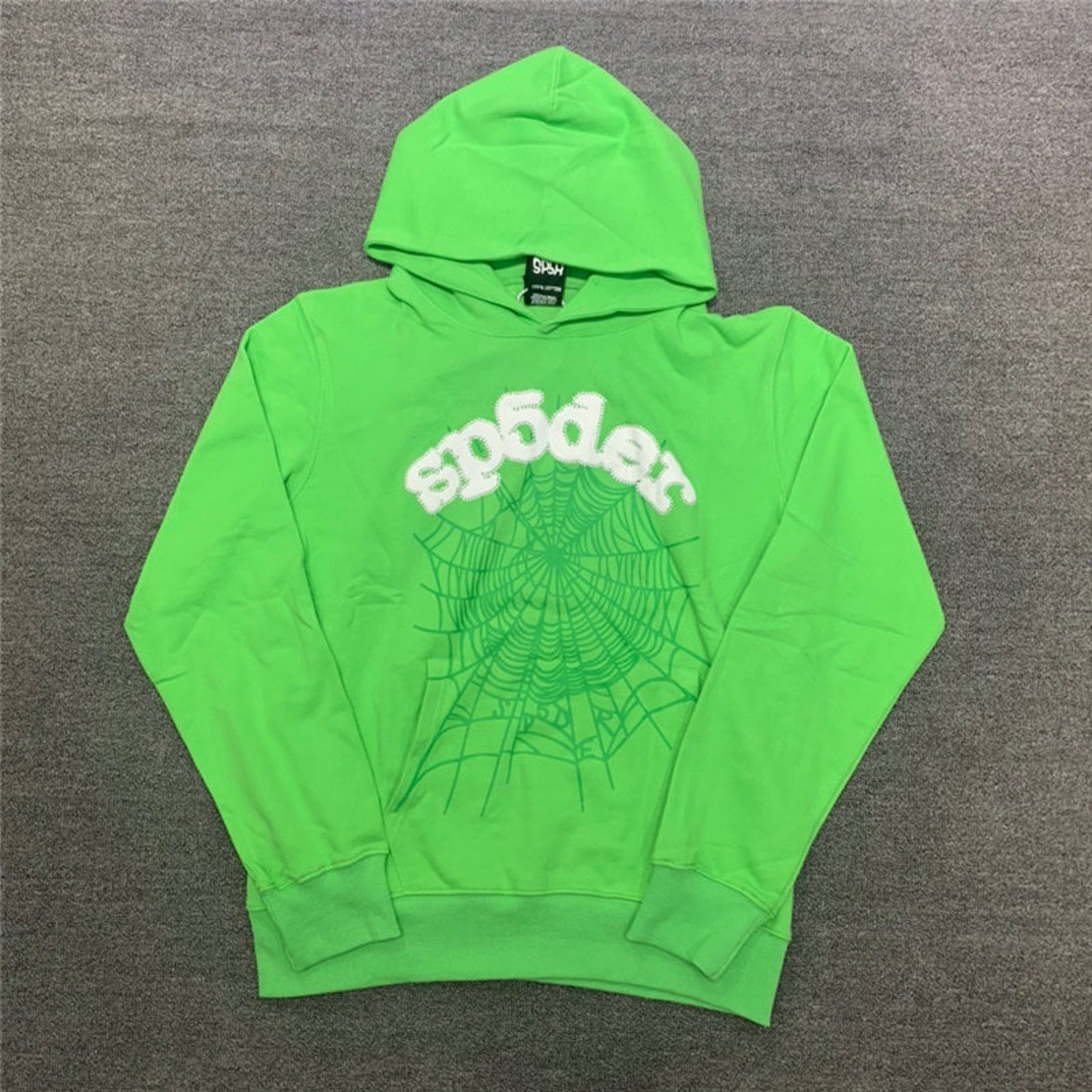
Among all the dominant street-style labels, BAPE comes closest to matching Sp5der aesthetically to Sp5der — both celebrate graphic intensity, vivid colorways, and a maximalist aesthetic philosophy that favors bold statements over quiet ones. BAPE, created by NIGO in Tokyo back in 1993, established the model of celebrity-promoted, scarce streetwear to a global audience and created the aesthetic model that Sp5der now operates within. However, BAPE’s cultural moment — during its prime in the mid-2000s when Lil Wayne, Pharrell, and Kanye West were seen in BAPE constantly — has come and gone, and BAPE’s current production, while still credible, carries a nostalgia quality that Sp5der completely avoids. Sp5der feels urgently contemporary in a manner that BAPE, with thirty years of history, cannot fully claim in 2026. Pricewise, the two labels are comparable, with BAPE hoodies typically ranging from $200 to $450 and Sp5der’s actual retail cost sitting between $200 and $400. Build quality is similarly matched, with both producing thick material constructions and detailed graphics that justify their price positioning at the top of the streetwear market. The key differentiator is cultural currency: in today’s market, Sp5der generates more immediate energy among the 16-to-30 demographic that defines the cutting edge of streetwear culture, while BAPE carries more heritage credibility with collectors and streetwear historians who remember its peak era firsthand.
Sp5der versus Off-White: Streetwear and Luxury Fashion Operating on Different Planes
Off-White, established by the late great Virgil Abloh in 2012, occupies a different altitude within the fashion hierarchy from Sp5der — more explicitly high-fashion, more expensive, and more committed to the conversation between streetwear and luxury couture. Comparing Sp5der to Off-White reveals less about which is better and more about the distinct goals and communities and for whom each was created. Off-White’s visual language — the iconic quote marks, diagonal graphic stripes, and deconstructed clothing — speaks to a fashion-literate audience that travels easily between the spheres of luxury retail and streetwear. Sp5der is made for a group of people that is rooted in hip-hop culture and street-level authenticity, for whom fashion-world cachet is less important than music-world co-signs. Price levels diverge significantly, with Off-White hoodies usually priced between $400 and $700, positioning Sp5der as the more affordable alternative at the premium tier. Following Virgil Abloh’s death in 2021, Off-White has carried on with new creative vision, but the brand’s identity has evolved in manners that have pushed away some of its original audience, creating an opening that brands like Sp5der have partially filled for younger buyers. Both brands reward buyers with outstanding graphics, premium build quality, and real cultural authenticity — they simply represent different cultural worlds, and nearly all devoted urban fashion collectors ultimately discover space in their closet for both, stylistically speaking.
Sp5der Against FOG Essentials: Opposing Philosophies
Fear of God Essentials stands for arguably the clearest philosophical opposition to Sp5der in today’s urban fashion market — Essentials is minimal, neutral, and restrained, while Sp5der is maximal, vivid, and exuberant. Jerry Lorenzo’s Essentials line, which operates as the accessible tier within the Fear of God ecosystem, produces premium basics in muted earth tones and minimal graphic treatments that are suitable for nearly any occasion without calling attention to themselves. The spider hoodie, on the other hand, makes its presence known at once, unapologetically — it isn’t a garment that stays in the background, and nobody who puts it on is aiming to blend into the background. Price is another key distinction: Essentials hoodies retail from around $90 to $130, making them dramatically more accessible relative to Sp5der’s $200-to-$400 price bracket. Yet the lower price also means the Essentials line lacks the rarity and collector appeal that form the core of Sp5der’s appeal, and its resale premiums are correspondingly modest against Sp5der’s characteristically meaningful secondary market performance. Choosing between these brands doesn’t come down to build quality — both create well-constructed garments at their individual price levels — but of identity and intention. For those seeking a functional, understated closet foundation, the Essentials line excels in that role. If you want a single hero piece that sends an unmistakable message about your connection to hip-hop culture and the boldly expressive side of street fashion, Sp5der is the clear answer.
Head-to-Head Comparison Overview
| Brand | Aesthetic Direction | Hoodie Retail Price | Cultural Roots | 2026 Hype Level | Resale Premium |
|---|---|---|---|---|---|
| Sp5der | Maximalist, hip-hop, web graphics | $200–$400 | Atlanta hip-hop | Among the Highest | Strong |
| Supreme | Minimalist, skate, box logo | $150–$350 | NYC underground skate and punk scene | Steady-High with legacy appeal | Among the Best |
| BAPE | Maximalist, camo, Japanese pop | $200–$450 | Japanese streetwear scene | Mid-range | Notable |
| Off-White | High-fashion streetwear hybrid with bold typographic design | $400–$700 | High-fashion meets streetwear | Moderate-to-Strong | High |
| Corteiz | Grassroots underground style with utilitarian sensibility | $100–$250 | London grassroots streetwear scene | High and still climbing | Moderate-High |
| Fear of God Essentials | Understated neutral-palette basics with premium construction | $90–$130 | LA luxury-adjacent | Moderate | Low |
The Qualities That Actually Set Sp5der Apart from the Competition
Stripped of hype and examined on the merits, Sp5der has several characteristics that truly set it apart from its competitors in real, significant dimensions. First, its founder authenticity is unmatched in the current streetwear landscape: Young Thug isn’t a marketing consultant who allowed his image to be used, but the design mind behind his own creative project, and that gap is discernible in the creative consistency and real personality of every Sp5der piece. Additionally, the brand’s visual vocabulary is entirely its own — the web graphics, rhinestone maximalism, and Y2K color palette build a coherent brand look that is not borrowed from or derivative of any brand that came before, which is a genuine achievement in a market where genuine novelty is uncommon. Furthermore, the label’s standing where hip-hop, streetwear, and fashion converge makes it uniquely legible across several cultural spheres at once, giving it cultural reach that more specialized labels can rarely match. Per Highsnobiety, the brands that achieve enduring cultural relevance are reliably those that convey an honest and original cultural worldview — a definition that applies to Sp5der significantly more than most of its more conventionally marketed rivals. Finally, Sp5der’s recent establishment means there hasn’t been sufficient time to settle into the complacency of a heritage brand, and the persistent creative momentum across its ongoing releases reflects a brand still operating with a point to make.
The Final Word: Who Should Buy Sp5der Above Other Options
Sp5der is the ideal selection for consumers whose style preferences, sense of cultural belonging, and fashion goals match what the label genuinely delivers, and a potentially poor choice for buyers looking for qualities it was never meant to have. If your aesthetic runs maximalist, if you connect with Young Thug’s creative vision, and if hip-hop culture provides the primary framework by which you interpret style, Sp5der will suit your closet and your sense of self more naturally than almost any alternative currently accessible. If you value investment-grade resale performance in your overall evaluation, the brand’s resale history is impressive, though Supreme’s longer resale history and deeper liquidity render it more reliable as an investment. For buyers who value flexibility and understatement, Fear of God’s line delivers more wardrobe utility for fewer dollars with far more outfit flexibility. The competitive landscape in 2026 presents truly strong alternatives across a range of aesthetics and price points, and the wisest urban style shoppers are people who engage with each brand on its own footing rather than ranking them in a false hierarchy. What Sp5der offers is a mix that no competitor brand fully reproduces: real hip-hop heritage, striking original graphics, high-quality construction, and authentic cultural energy. Find out more about how Sp5der stacks up through impartial coverage from Complex, offering thorough brand breakdowns and reader discussion around current streetwear brand rankings.